Archive Note: This article was originally published on LinkedIn on December 7, 2025.
Reflecting from 2026: This remains the most personally difficult thing I have published. Everything in it happened. Every example is real. The response it received suggested I was far from alone in experiencing it, and I stand by every word.
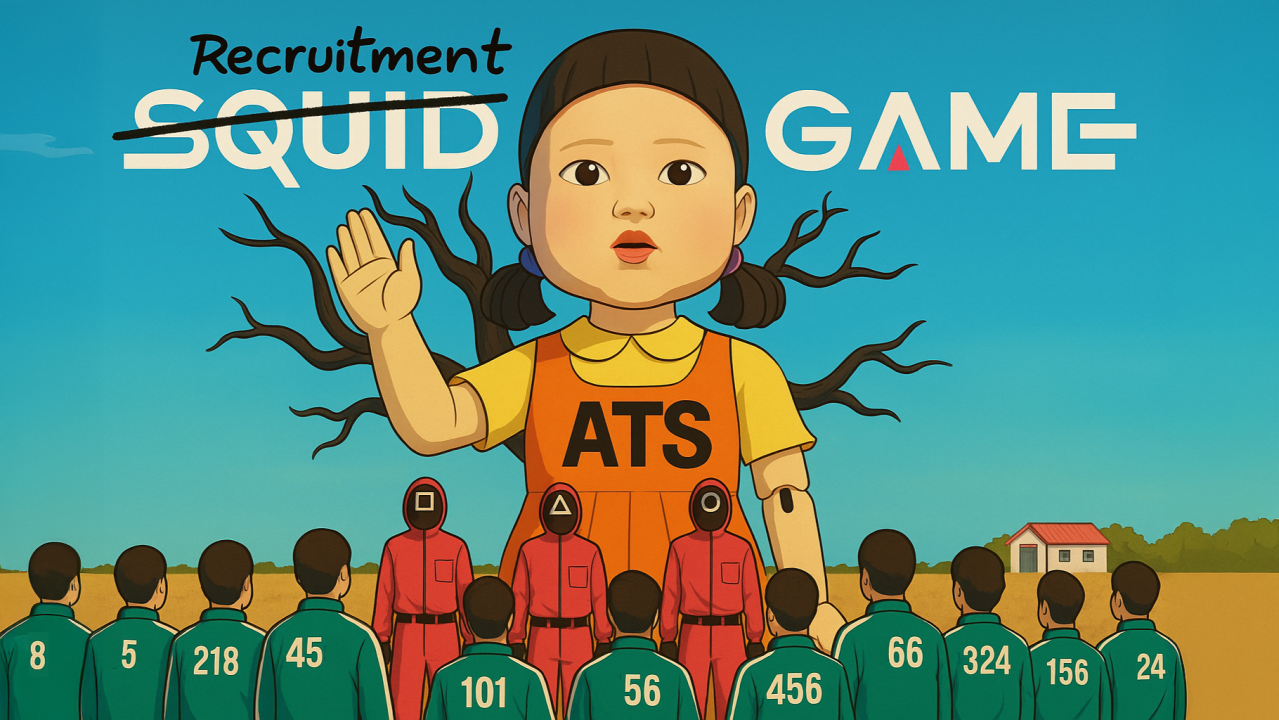
Sometimes the modern hiring process feels less like a professional evaluation and more like a low-budget remake of Squid Game. The recruiters wear metaphorical masks (usually a no-reply@ email address). The candidates wear numbers rather than names. On the rare occasion you meet an actual human being, nothing in the interaction suggests they've read anything about you beyond a scrambled AI summary.
Everyone follows a set of rules no one explains. Each round eliminates a few more hopefuls with all the dignity of a waste-disposal system. The first round is always "Red Light! Green Light!", where the ATS acts as the giant animatronic doll, vaporising candidates with the reasoning power and accuracy of a slightly tired toddler launching darts in the general direction of a dart board.
Meanwhile, candidates treat the process seriously. You look at the company. You study the product. You read the documentation. You assess whether you are right for the role and the company, whether you can be truly engaged by what they are doing or the products they produce. If the answer is yes to all of the above, you apply. If you are not kicked out by that toddler with the darts and are called for an interview, you show up prepared. Then you step into the arena hoping this round isn't another example of an interviewer skimming your CV at best or simply briefly glancing an AI-generated bullet list five minutes beforehand.
"Number 456 is waiting in the Zoom lobby" ...is honestly more realistic than Zoom showing your name to an interviewer who hasn't bothered to look at it.
When you're eliminated, your organs remain intact and aren't harvested, but you will get the message…
"Thank you for playing, please leave your feedback in the survey"
Naturally, no feedback will be coming your way.
You've been ejected from the game.
"Player 456. ELIMINATED!" ...seems far more appropriate.
Now, satire is fun. But the real problem is that this system shouldn't lend itself to satire this easily.
When Interviewers Have Not Read Your CV
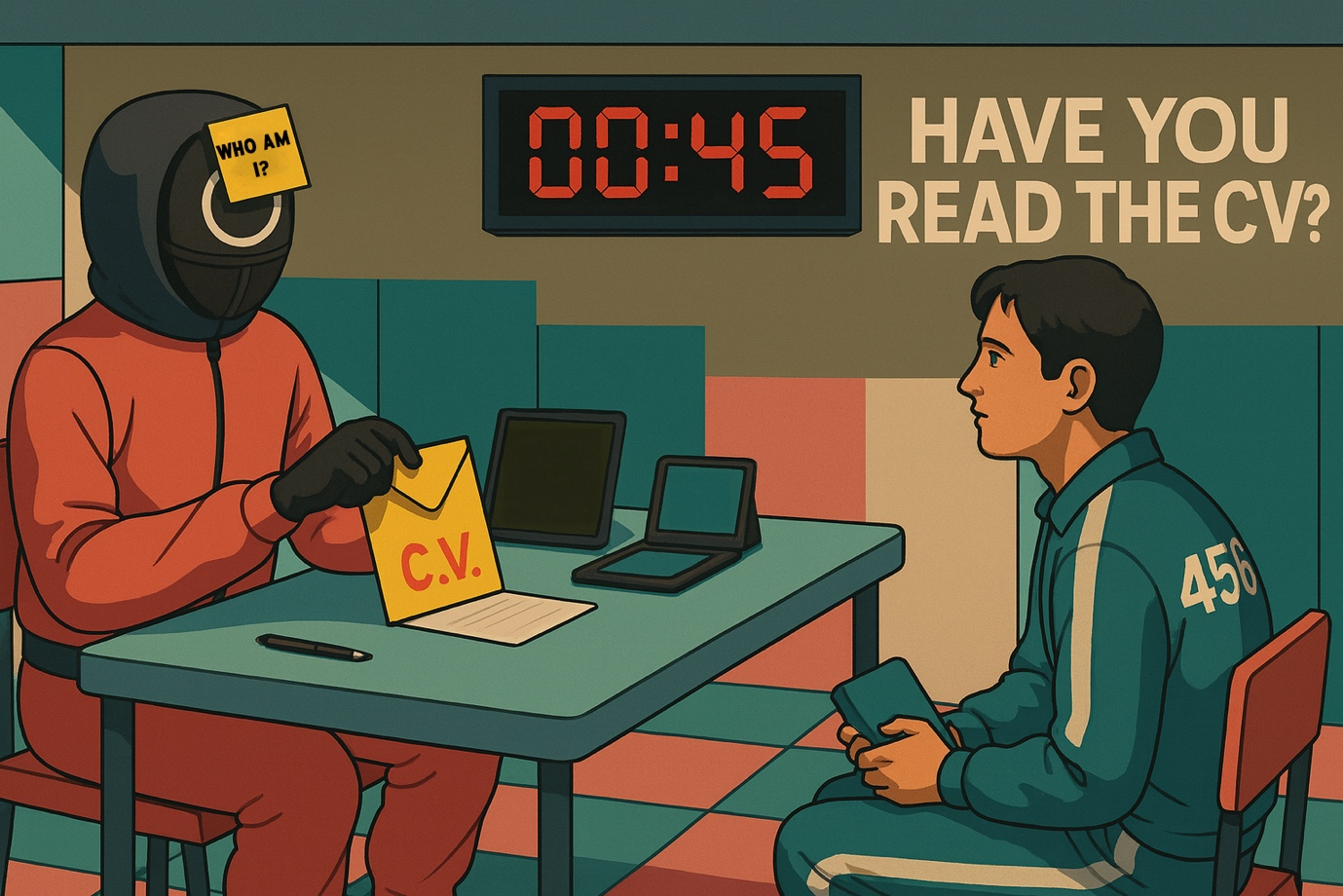
I've now had several interviews where it was glaringly obvious the interviewer had not read my CV. Not skimmed it. Not glanced at it. Not even opened it. One interviewer spent the first few minutes asking questions as though he was playing a round of "Who Am I?" with my name stuck to his forehead.
When he eventually asked whether I had links to content I'd produced (which were already on the CV he hadn't read) he finally attempted to open it. After a little monologue about multi-factor authentication being "a pain", he sat in silence reading it for the first time while I politely filled the dead air like a hostage trying to soothe their captor. If you can't be bothered to read a CV, fine. But maybe recruitment isn't for you and I am a little concerned that you are the gatekeeper to me progressing in the process.
The Multi-Round Circus
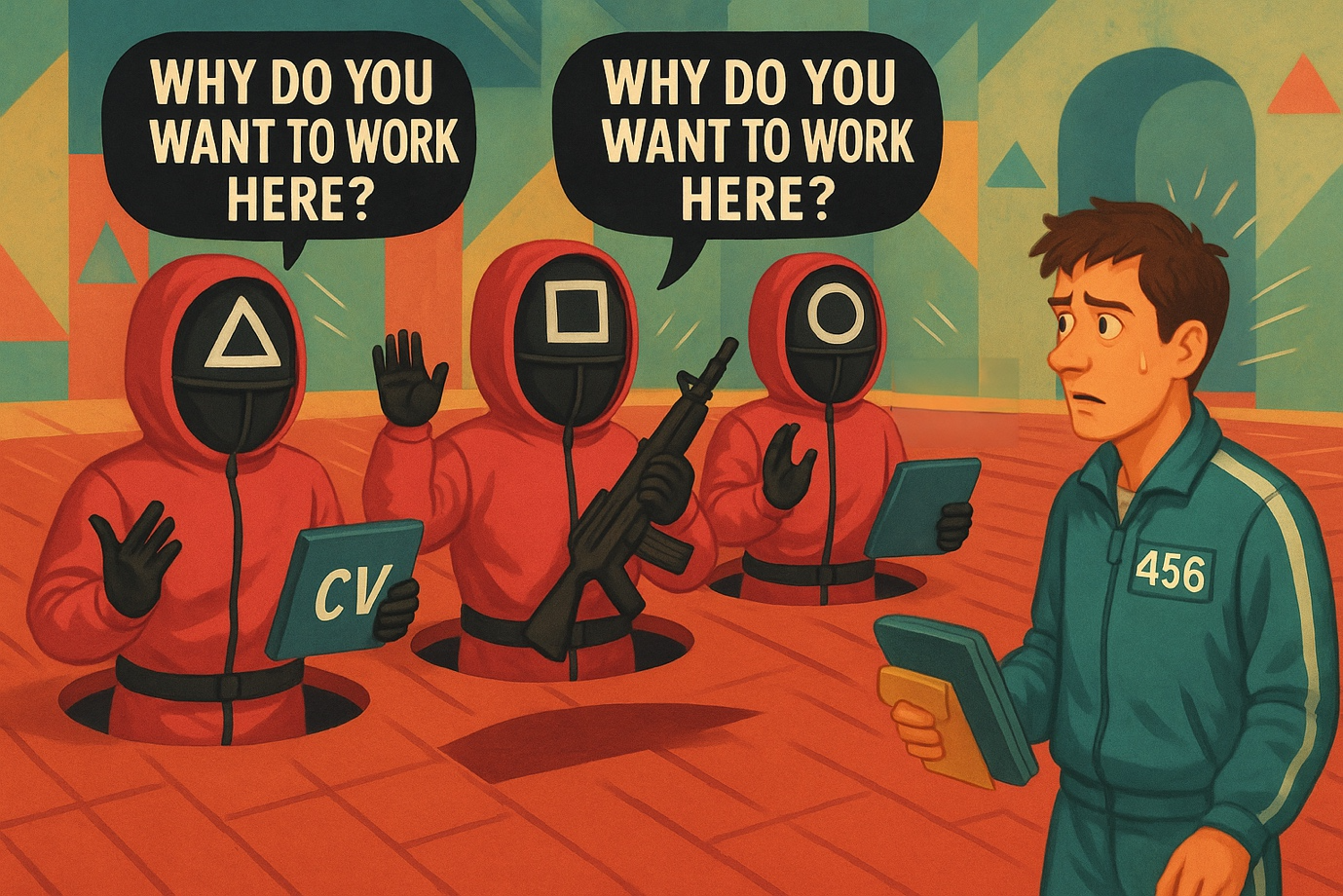
Then there's the multi-round circus. Five or six interviews. Five or six people. No communication between them. No notes. No recordings. No shared context. The same questions pop up like the moles in several rounds of whack-a-mole, and you start wondering if you're supposed to repeat the same answers or maybe start to improvise.
Maybe the idea is to impress them with your ability to totally improvise various answers and the person who gets the best story wins a prize. I mean, if that is the case I would happily play along. Alternatively, why not let me perform to everyone at the same time?
Timelines That Make No Sense
Then we have the timelines.
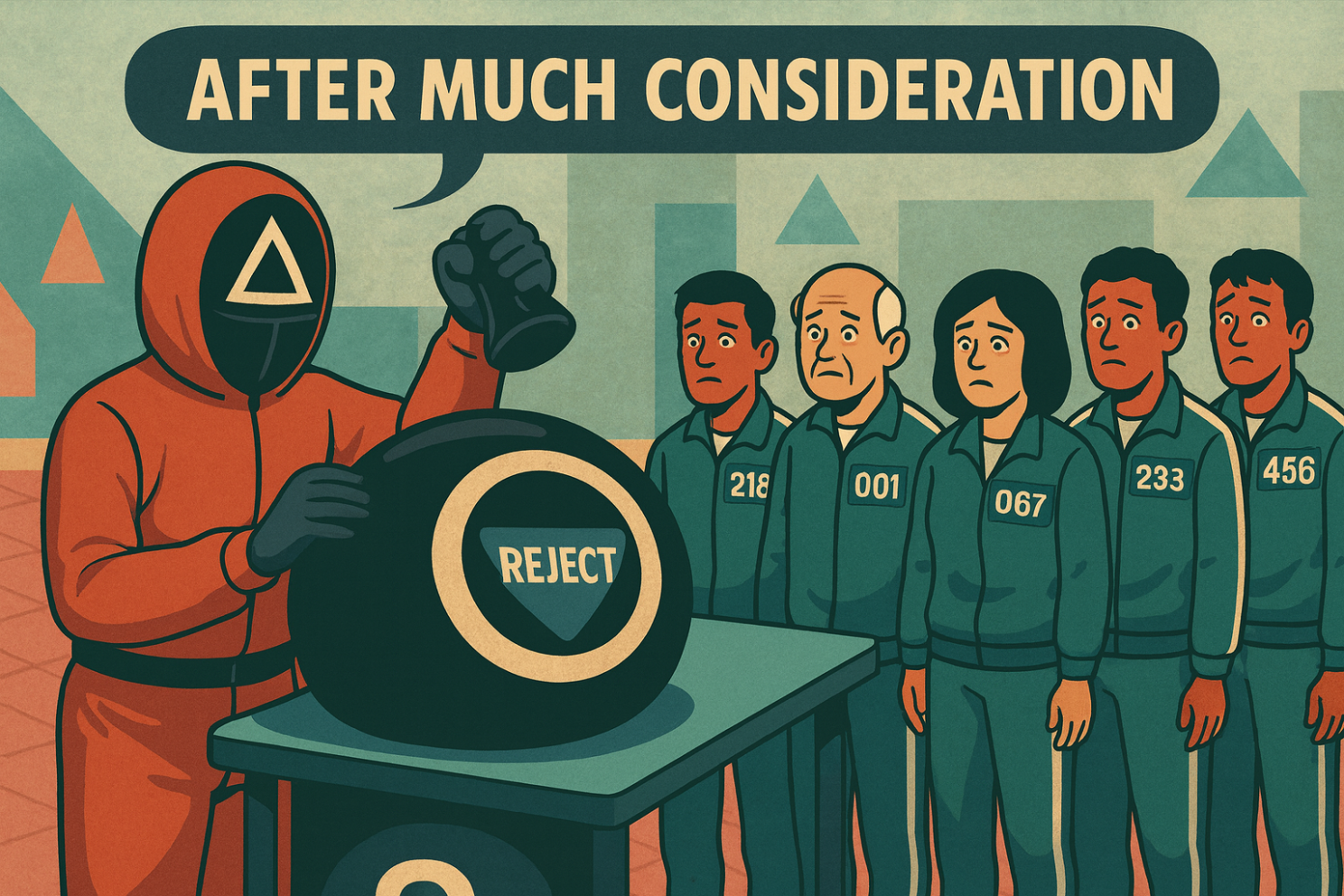
"We'll be in touch in the next couple of days" ...somehow mutates into two weeks of complete silence, followed by an urgent second interview, followed by a rejection email 90 minutes after that interview ends.
The phrase "after much consideration" appears in that email, suggesting that extensive analysis, reflection, and debate must have occurred in the tight gap between their lunch and the next meeting. Unless they consulted a Magic 8-Ball three times for statistical reliability, there was no "much consideration". There was a button. Someone pressed it.
Territorial Interviewing

Let's not forget the dynamic where people interviewing you are at the exact level you're applying for. There's also the scenario where the hiring manager is technically senior to the role, but you clearly have more relevant experience. When the process is unstructured and undocumented, it's very hard to shake the suspicion that some of these conversations are less about evaluation and more about territorial preservation.
The Mythical Feedback That Never Arrives
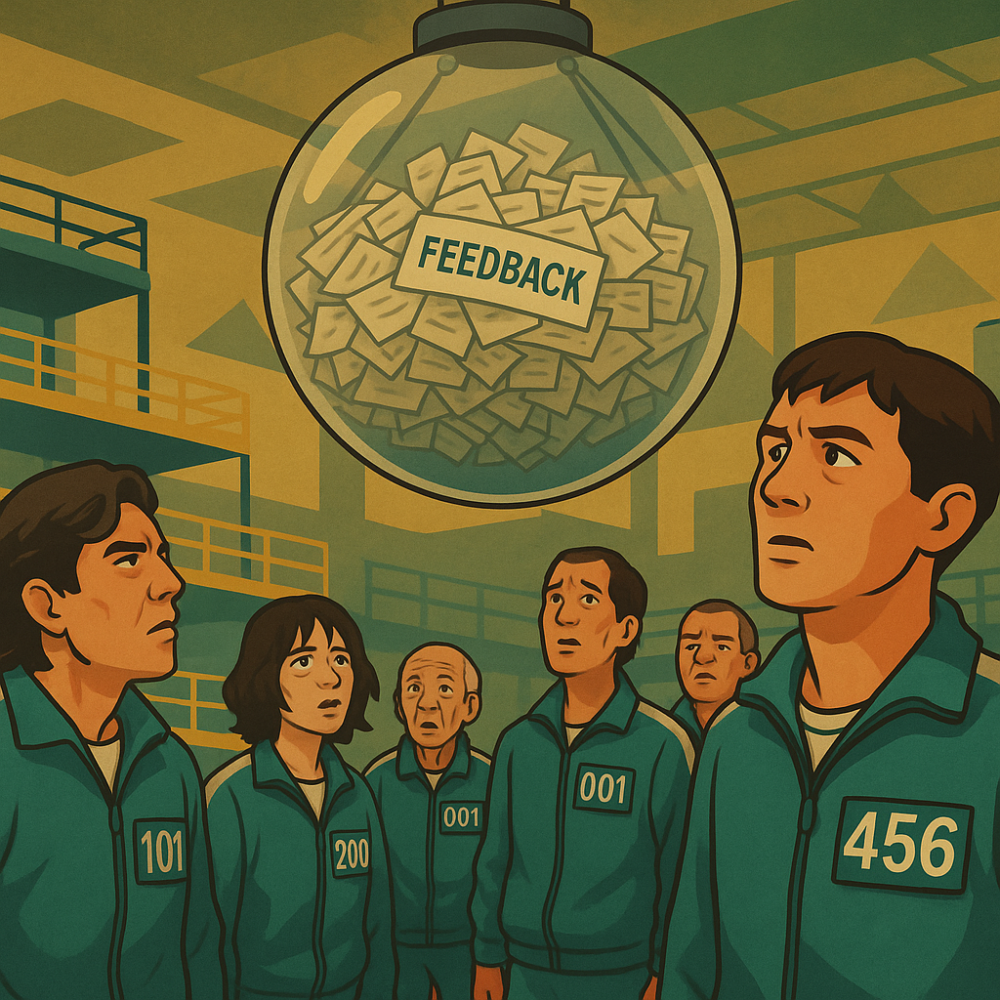
Now we arrive at feedback. The rare, mythical treasure that candidates crave. Like Christmas for children, the magic lies mostly in its scarcity. In the last year alone, I have never once been offered feedback. When I've asked for it, more than half simply ignored me. The rest produced responses that would struggle to pass as competent improvisations.
One company told me I...
"lacked the marketing background they needed" ...after I'd spent part of the interview discussing mutual colleagues from the marketing department we both worked in at different times.
Another claimed my downfall was saying...
"I enjoy producing content that engages developers" Apparently that's a red flag for a Developer Advocate role. It took them five interviews and a practical exercise to produce that gem.
One company said of the person reviewing my multi-day practical exercise...
"Unfortunately they left no feedback that we can give you" The exercise required building a user interface, documenting an API, and writing a tutorial. These examples are not feedback, they are examples of someone pointing in one direction while sprinting off in the other.
The ATS: As Reliable As X (Twitter) For Returning Truths
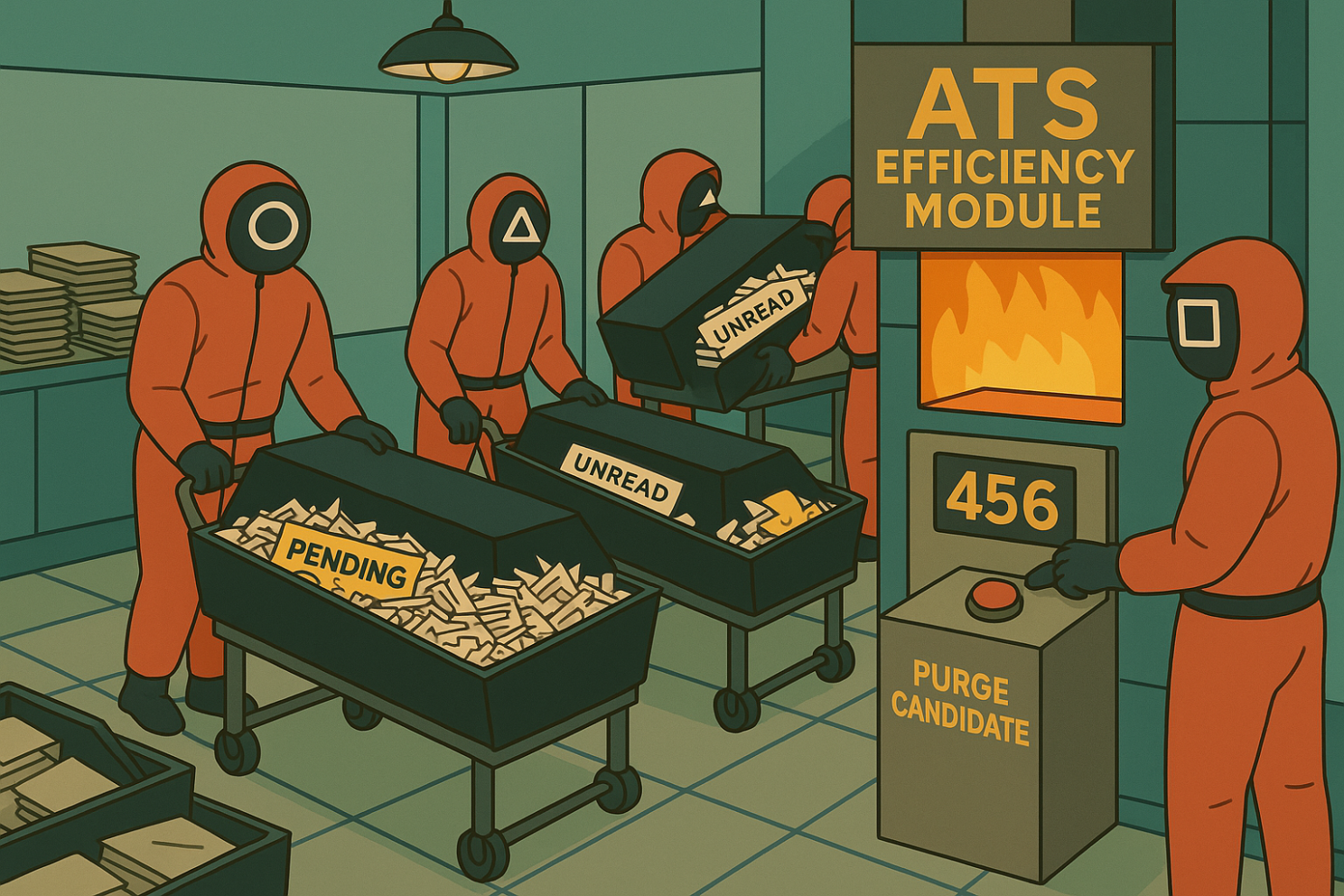
Then there's the pièce de resistance, the ATS-generated detritus. Emails requesting you accept new terms so they can "keep your data on file for any future roles that come up" arriving before the formal rejection email. Automated survey requests asking you to rate the interview experience while your request for actual feedback remains fully untouched. It's also astonishing how efficiently an ATS can purge a candidate, yet utterly fail to notify them they've been removed from consideration.
You may hear back in two weeks, two months, or never. The systems seem equally happy with all outcomes.
A Real Example That Made Me Stop and Question Everything
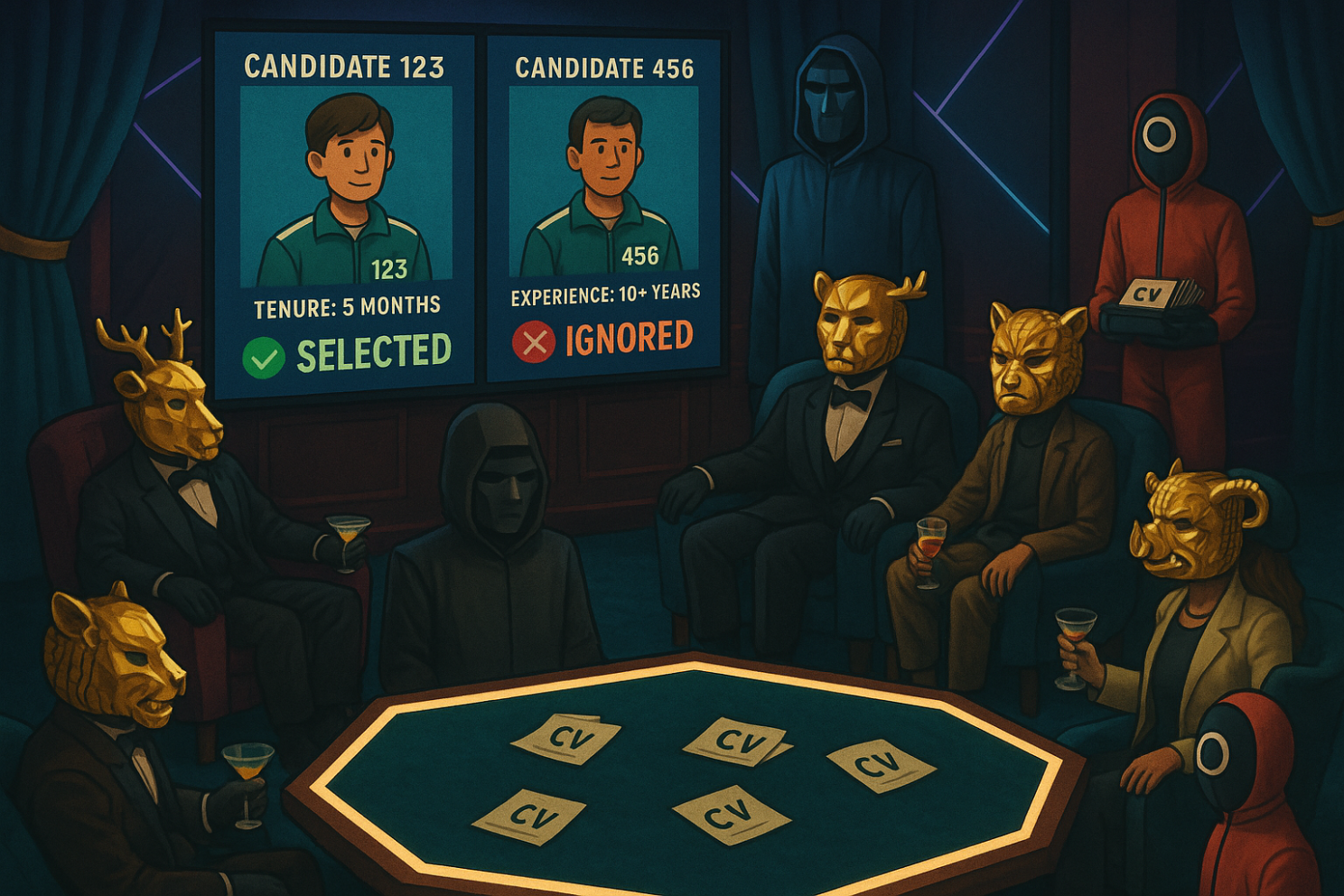
I get it. You're reading this and thinking "You say you are missing out on interviews you should have had. But what makes you think that? Do you have any evidence?". Well yeah, I kind of do have experiences that have supported my theory. This one is very difficult to overlook.
Every so often I go back through the roles I have applied for to see if I can learn anything from the people who were hired. Not out of resentment, but because I genuinely want to understand what I might be missing and where I can improve.
A few months ago I looked up a Developer Advocate role for an open source ETL company. This is the exact domain I have spent more than a decade working in. I was a director at another open source ETL company, leading developer advocacy and community. If ever there were a role I should have been a strong candidate for, it was this one. Yet I was completely ignored at the application stage.
Curious, I tried to find who had been hired. Normally this is easy, but nothing obvious appeared. So, I took a different approach and looked for developer advocate style content posted around the time I knew the role would have been filled. That narrowed it down to three people, and from there to one.
What I found was startling. The person who had been hired had left after seven months. They had moved into another role with another company that I had applied for and again, been completely ignored. They had left that role after three months. They were now in yet another role I had applied for and again been ignored. No gaps, no career breaks, just rapid transitions. In total, they had held nine roles since 2019.
I do not know this person. I am not judging this person. People have their own circumstances, opportunities, and motivations. But when someone with nine roles in five years is repeatedly selected over someone with deep domain experience, stable tenure, and a decade of specialisation, and when this happens at multiple companies for multiple roles… it becomes impossible not to question the filters deciding who gets seen and who gets discarded.
If this is who the system elevates while completely ignoring someone with directly relevant long-term expertise, then something in the process is badly misaligned. Not with candidates. With the mechanisms used to assess them.
The Human Cost of a Broken System
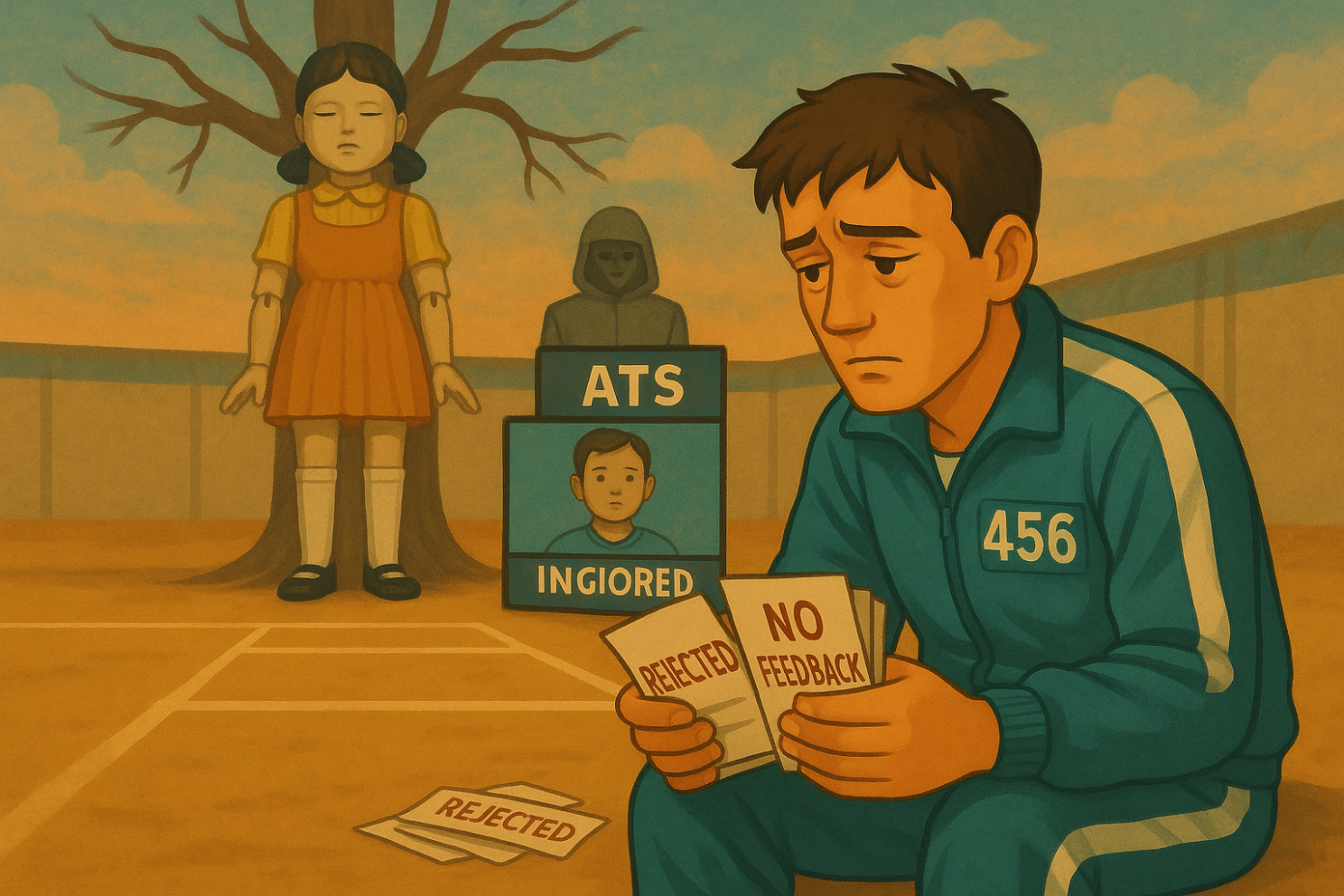
The uncomfortable truth is that candidates are expected to prepare thoroughly, research deeply, behave professionally, communicate respectfully, and invest serious time into these processes. While the companies running the processes frequently demonstrate none of the above. Expecting basic reciprocity is not entitled. It is the minimum standard of adult interaction.
Until that changes, recruitment will continue to resemble Squid Game. Unclear rules, mysterious eliminations, masked figures making arbitrary decisions, and an ongoing suspicion that the entire enterprise is less about selecting talent and more about testing who's willing to tolerate organised nonsense without asking too many questions.
If companies genuinely want better candidates to make it through their pipelines, they could start by treating those candidates as human beings. A CV that happens to satisfy the arbitrary pattern-matching of an ATS doesn't represent competence any more than a CV written outside that pattern signals incompetence. Forcing candidates to guess the rules of the game to get past the initial trapdoor, only to treat them with thinly veiled disdain afterwards, is never going to inspire confidence in your organisation.
As a man who grew up in a very different time, I find it difficult to talk publicly about anything that might be interpreted as weakness. I am not naturally inclined to share personal frustration, but I think this part matters. Everything I have satirised in this piece has happened to me. Every example. I could name the companies. I could name the interviewers. In some cases I could list multiple companies for the same behaviour. When these things happen once or twice you can shrug and say it is part of the game. When they keep happening, over and over again, it moves from irritating to infuriating.
I might have mocked the process, but the truth is that I am angry about how I have been treated. I consider myself fortunate. I am not at risk of losing my home. I do not have children to support. I am not in a financially vulnerable position. But many people who are put through this broken system do not have that stability. For some, securing a role genuinely determines whether they can keep a roof over their head. Yet the response from the recruitment world is often something along the lines of...
"We are very busy, please understand" The impact of that broken system on people in difficult situations is far more brutal than anything I am experiencing.
Even for me, someone who is financially safe, the mental strain has been significant. I have never said this publicly before, but this process has damaged my mental health. I know the roles I apply for are roles I can do. I do not fail at work. Yet I barely make it beyond the ATS for a small fraction of the many positions I know I am qualified for. That small percentage is after I have already pre filtered myself with incredible severity because my imposter syndrome makes sure I only apply for roles where I tick every box. When the majority of those applications are ignored, or dismissed by a system that never interacted with me as a person, it becomes very hard not to take it very personally.
If I were in a position where my income determined whether I could pay rent or buy food, I do not know what this would be doing to me. My confidence being eroded is one thing. My imposter syndrome being reinforced is another. But for someone who is financially vulnerable, this system is not just inefficient. It is dangerously cruel.
This is why I have chosen to speak openly. It is not about bitterness. It is about raising a genuine issue that affects thousands of people. The current system is not acceptable, and pretending that the volume of applicants excuses everything does not make it acceptable. At some point, someone has to say it out loud.
Suggestions to Improve the Recruitment Process
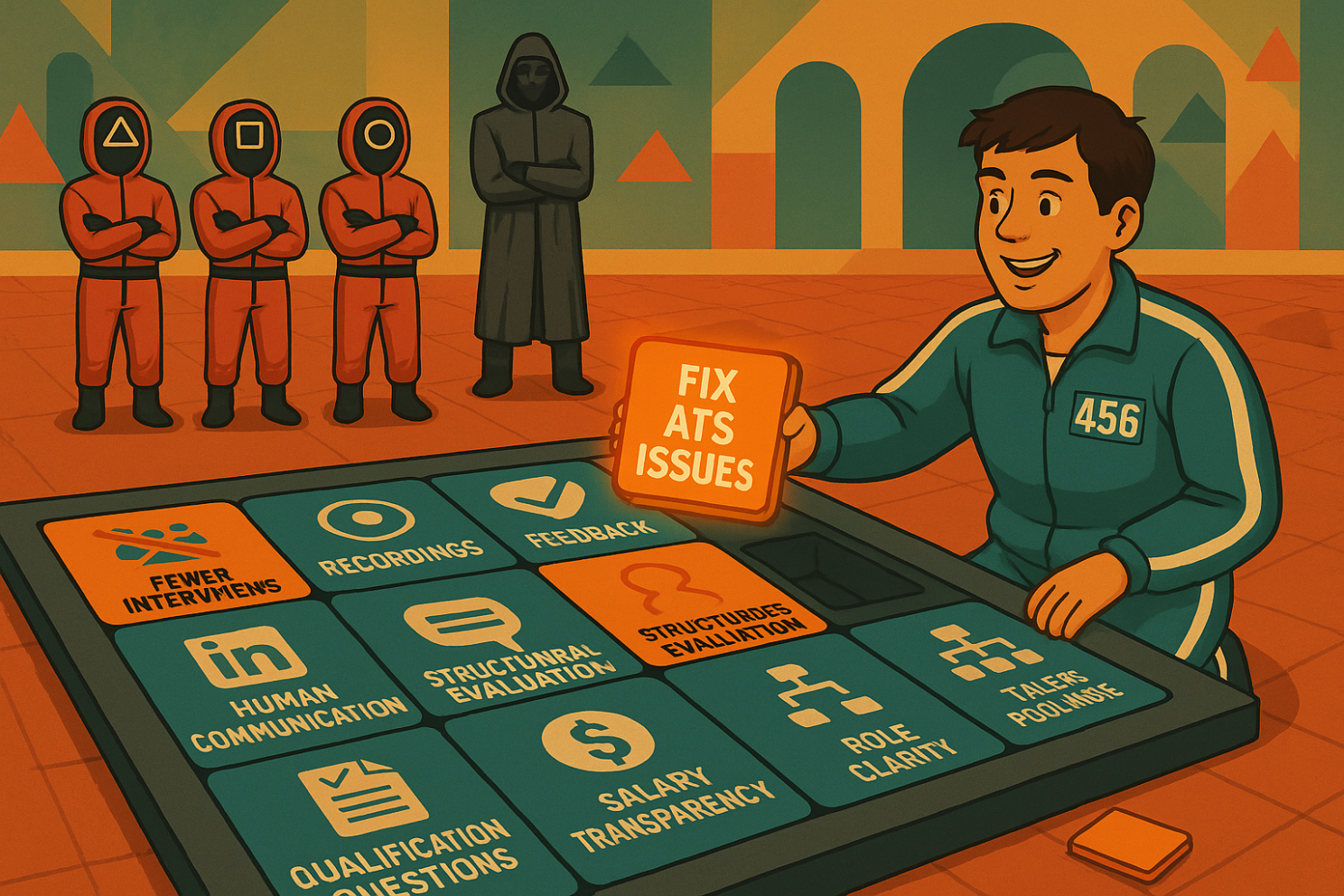
Don't you hate it when people whine about what's wrong, but don't provide any answers? Any alternatives? Yeah, so do I. I'm a problem solver by nature. Now this isn't my domain, but I think I have learnt enough to point out a few obvious fixes.
-
Reduce the number of one to one interviews. There is no reason to schedule five or six separate meetings with five or six different people. Bring multiple interviewers into the same call. It saves the company time, removes repetitive questioning, speeds up the overall process, and ensures everyone hears the same answers instead of comparing half remembered notes.
-
Take notes or record the interviews. If you expect candidates to take the process seriously, the company should do the same. Notes allow for consistent evaluation and for meaningful feedback. Recordings can be summarised with AI and provide objective context for decision making. It also stops everything relying on one interviewer's memory of a 45 minute conversation squeezed between other meetings.
-
Give actual feedback. Not vague phrases. Not template responses. Real feedback that is tied to the conversation that took place. Candidates invest serious time into applications. Sending one or two sentences of genuine feedback is not extravagant, it is respectful. You also protect your employer brand by doing this.
-
Fix the ATS problem. If qualified candidates are being automatically rejected, the system is broken. If a CV must be structured in a very specific way to get through, tell people the rules. Or allow the ATS to compare CV information with LinkedIn, which is usually more detailed and more accurate. Many candidates only apply for roles they are a strong match for. When those get rejected at stage zero, the system is doing material harm to both sides.
-
Stop treating the CV as the single source of truth. If you are going to ask for a LinkedIn profile, read it. LinkedIn often contains examples of work, content, history, references and context that do not fit neatly into a CV. You get a far clearer understanding of the person you are evaluating and you avoid missing out on talent because your process is stuck in the 1990s.
-
Keep the process human. Set clear timelines. Stick to them. Update people when things change. If you expect professionalism from candidates, mirror it. Most frustration in recruitment comes from silence and inconsistency, not rejection. Basic communication goes a long way.
-
Build structured processes that limit bias. Use consistent questions, shared evaluation frameworks and transparent scoring. When peers at the same level as the candidate are involved, structure protects against subconscious territorial behaviour. Good companies hire people who raise the bar, not only those who maintain the status quo.
-
Use blind selection for the initial stages. If the goal is diversity and fairness, begin by removing demographic information from the first pass. Assess the work, the projects, the skills and the capability. Age, gender, sex, race, background and even university should not influence the first stage. You do not fix bias by shifting it. You fix it by preventing it from entering the process in the first place.
-
Introduce a simple role specific qualification step. A short set of targeted questions at the point of application filters out people who are applying to everything without requiring an ATS to guess relevance. Two or three practical questions based on real experience can quickly differentiate suitable candidates from those who have no connection to the role at all. It saves recruiters time and respects the efforts of serious applicants.
-
Be upfront about compensation. Publish the salary range. Stop asking candidates to guess in the early conversations. It puts unnecessary pressure on people, particularly those who have been out of work or are financially vulnerable. If companies want fewer unsuitable applicants, transparent compensation is one of the easiest and most effective ways to help people self select out.
-
Make sure the recruiter actually understands the role. A huge amount of hiring chaos starts with job descriptions that feel like they were assembled by someone guessing their way through buzzwords. Vague responsibilities, copy-pasted requirements and junior roles demanding five years of experience in technologies that barely existed before last Tuesday all create the same problem. If a description is inaccurate or inflated, you guarantee two outcomes: unsuitable applicants who think they qualify because the role itself is nonsense, and suitable applicants who walk away because it's clear the company has no idea what it really needs. Write clear, grounded role descriptions and people will self-select more accurately. If you want better applicants, start by giving them something better to apply to.
-
Actually use the talent pool you already built. Companies keep telling candidates, "We'd like to retain your details so we can consider you for future roles." Has anyone, anywhere, ever received one of those follow up messages? More often than not, new roles are posted into the wild with zero reference to people who already interviewed, completed exercises or demonstrated interest. It's a complete waste of understanding. If a company truly wants to reduce inbound volume, one of the most effective ways is to build and maintain a real talent pool from the people they've already evaluated. Not instead of advertising new roles, but alongside it. Reconnect with candidates who made it to final stages. Reconsider people who narrowly missed out. Build context over time instead of throwing it away after each rejection email. You'll reduce the flood of speculative applicants and actually develop meaningful pipelines with people who have shown they want to join. It's efficient, fair and far more human…and astonishingly underused.
I didn't write any of this to score points or stir outrage. I'm not a poster of rage bait. I wrote it because the experience of finding work should not resemble a survival game wrapped in corporate branding. Candidates deserve better than silence, randomness, and systems that move with all the precision of a toddler learning fine motor skills. The absurdity makes it easy to laugh, but the impact is very real.
If companies want to hire talented people, they need to give that talent a chance to reveal itself, not bury it beneath processes that reward confidence theatre over competence. The system is broken. It needs to be fixed. Right now it's harming the wrong people; eventually it will harm the organisations too, as they trade genuine skill for louder voices with far less to show.
Source: This article was originally published on LinkedIn.
Status: Archived & Updated for rilhia.com.